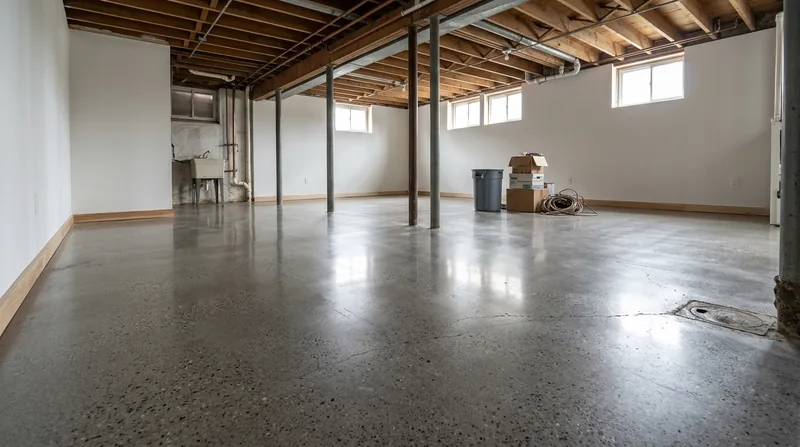




Polished concrete in Buffalo transforms raw concrete floors into sleek, durable surfaces that handle the region's harsh freeze-thaw cycles, road salt spray, and heavy moisture without the maintenance burden of traditional coatings. Whether you're finishing a garage floor in Cheektowaga, a basement in South Buffalo, or a showroom in downtown Buffalo, polished concrete delivers a professional look that stands up to Western New York winters. Our mechanically ground and sealed concrete creates a high-gloss or matte finish that resists staining, spalling, and the salt damage that degrades unsealed slabs across the Buffalo area. This is concrete engineered for the lake-plain climate, not a quick cosmetic fix. We handle the full process from grinding and polishing to sealing, so your floor stays protected year-round.
Why Polished Concrete Matters in Buffalo's Freeze-Thaw Environment
Buffalo's glacial lake-clay soil and brutal winter cycle of freeze, thaw, and salt exposure destroy unsealed concrete fast. Moisture wicks up from the ground, freezes in the slab, and spalls off the surface, leaving pitted, crumbling edges by March. Polished concrete sealed properly blocks that moisture path and creates a hard, impermeable surface that laughs off road salt, snowmelt, and the grey, damp springs that define our climate. A polished garage floor or basement slab stays intact where a raw or painted slab fails in five to seven years.
- We grind the concrete slab smooth to remove the porous top layer that absorbs moisture and salt.
- Multiple polishing passes create a dense, sealed surface that resists freeze-thaw damage and spalling.
- A quality sealer bonds into the polished finish and protects against oil, stains, and road salt tracked indoors.
- The result is a floor that needs only damp-mopping to stay clean, with no wax buildup or recoating cycles.
That durability and low maintenance is why polished concrete works so well in Buffalo homes and businesses facing decades of lake-effect snow, salt trucks, and moisture-heavy springs.
Key info: Buffalo's shallow limestone bedrock and slow-draining lake-silt soil mean water sits under slabs all spring. Unsealed concrete wicks that moisture, freezes it, and spalls. Polished concrete with a quality sealer is the only finish that truly stops the cycle. See how we handle the moisture challenge in our concrete repair and resurfacing guide.
For more on Buffalo's specific soil and drainage challenges, the New York State DEC soil and groundwater information outlines the lake-plain geology that drives our approach.
How We Polish and Seal Concrete Floors in Buffalo Homes and Garages
Polishing concrete is a multi-step mechanical process that grinds the slab progressively finer, then seals it to lock in durability. We start with a site walkthrough to assess the slab condition, existing damage, and moisture levels. The grinding removes old paint, sealers, and the top porous layer of concrete, exposing the aggregate and creating a uniform surface. We then apply increasingly fine polishing grits, finishing with a topcoat sealer that hardens the surface and repels water, oil, and salt. The whole process takes 3 to 5 days for a typical two-car garage or basement, depending on slab size and condition.
- We inspect the slab for cracks, heave, and moisture issues before we start grinding.
- Coarse grinding removes old coatings and reveals the concrete base in an even, clean surface.
- Mid-grit and fine-grit polishing passes create the smooth texture and visual depth you see in the finished floor.
- We apply a penetrating sealer that hardens the concrete and provides stain and moisture resistance.
- Final inspection and light cleaning ensure the floor is ready for foot and vehicle traffic immediately after.
This method works on existing concrete, new pours, and slabs that have been damaged by salt or freeze-thaw spalling, making it ideal for Buffalo's mix of old Victorians with basement slab issues and newer homes with garage floors needing protection.
Real example: A homeowner in Elmwood Village had a 1920s basement with a cracked, moisture-weeping concrete floor. We ground out the old surface, sealed the active cracks, and polished the slab to a matte finish. The sealer stopped the moisture wicking, and the polished surface now handles the spring thaw without any new spalling. Same outcome works for the narrow driveways and garage floors common across North Buffalo and Kaisertown.
For details on how we approach damaged slabs, see our concrete leveling and slab lifting page.
Polishing Methods: Gloss, Matte, and Specialized Finishes
| Approach | Description | Best for |
|---|---|---|
| High-gloss polish | Grind to 800-3000 grit with a hard sealer for maximum shine and light reflectivity. | Showrooms, retail spaces, modern homes where visual impact matters. |
| Matte or satin polish | Grind to 400-800 grit with a lower-sheen sealer for a natural, understated look. | Residential garages, basements, and living spaces where slip resistance and subtlety are preferred. |
| Aggregate exposure | Grind deeper to expose colorful aggregate or decorative stones in the concrete mix. | High-end residential, galleries, and spaces where the concrete itself is part of the design. |
| Densifier-sealed polish | Grind and apply a chemical densifier that hardens the concrete, then seal with a topcoat. | High-traffic commercial floors and garages in Buffalo where durability and minimal maintenance are critical. |
Each finish delivers the same freeze-thaw protection and moisture resistance, but the visual and tactile quality differs. We recommend matte or satin for most Buffalo homes because it hides dust, is less slippery on winter mornings, and feels more natural underfoot than mirror-bright gloss.
Polished Concrete Cost in Buffalo: What to Expect
Polished concrete in Buffalo starts at around $4 per square foot for a straightforward garage or basement slab with no structural damage, existing sealer to remove, or moisture remediation needed. That ballpark covers grinding, polishing, sealing, and basic cleanup. Larger slabs and simpler geometry tend toward the lower end, while complex layouts, old paint or epoxy removal, and active moisture issues push the price upward. A typical two-car garage (400 to 500 square feet) usually runs $1,600 to $2,500 all-in, depending on current condition and the finish you choose.
The biggest cost drivers are slab size, existing surface condition, moisture problems that need addressing before polishing, and the depth of polish you want. A matte finish costs less than high-gloss because it requires fewer polishing passes. If your slab has cracks, heave, or active moisture, we may recommend slab lifting or repair before polishing, which adds to the total. Getting two or three estimates from insured contractors in Buffalo and surrounding areas like West Seneca, Cheektowaga, and Kenmore is smart because site conditions vary widely, and a contractor who sees the slab in person can give you a real number.
For a detailed breakdown of pricing across all our services, see our full pricing guide. We include travel to Buffalo and all surrounding areas with no separate mileage fee, and we provide a free estimate with a 24-hour response time at (716) 517-4106.
What to Look for When Hiring a Polished Concrete Contractor Near Buffalo
Hiring the right concrete contractor means checking insurance, getting multiple estimates, and understanding what you're paying for. Start by verifying that any contractor you call carries general liability and workers' compensation insurance on every job, and ask for a certificate of insurance before work begins. Get at least two or three written estimates that break down labor, materials, and sealing cost separately, so you can compare apples to apples. Call references from recent jobs in Buffalo, Cheektowaga, or West Seneca and ask specifically about the floor's performance after the first winter and whether moisture issues were solved.
If your basement or garage has a history of moisture or flooding, discuss that upfront because some slabs need drainage work or moisture barriers before polishing will hold. Check whether your HOA or municipality has any rules about driveway or garage finishes, especially if you're in a historic district like Elmwood Village or Allentown. A contractor who takes time to walk the slab with you, explain the process, and answer questions is more likely to deliver a result that lasts through Buffalo's winters.
Ready to get started? Contact us for a free estimate. We'll inspect your slab, discuss your goals, and give you a clear price with no obligation.
Polished Concrete in Buffalo: Pricing Guide
| Service | Price | Details |
|---|---|---|
| Matte or satin polish, small to mid garage | Starting at $4/sq ft | Straightforward slab with no structural damage or moisture issues, 300-600 sq ft typical. |
| High-gloss or aggregate-exposure polish | Starting at $5/sq ft | Additional polishing passes and specialized sealer increase labor and material cost over standard matte. |
| Existing paint or epoxy removal plus polish | Starting at $6/sq ft | Grinding off old coatings adds time and equipment wear, common in Buffalo homes with old garage finishes. |
| Moisture remediation or crack repair before polish | On estimate | Cracked or heaving slabs need structural work first, requires site inspection to price accurately. |
| Travel within Buffalo and surrounding areas | Included | No separate mileage or call-out fee for jobs in Buffalo, Cheektowaga, West Seneca, and nearby towns. |
| Free estimate and inspection | Free | 24-hour response, no obligation to book, includes slab assessment and written price breakdown. |
Indicative pricing, the exact cost depends on square footage, finish, and site access. Free personalized estimate within 24h at (716) 517-4106.


