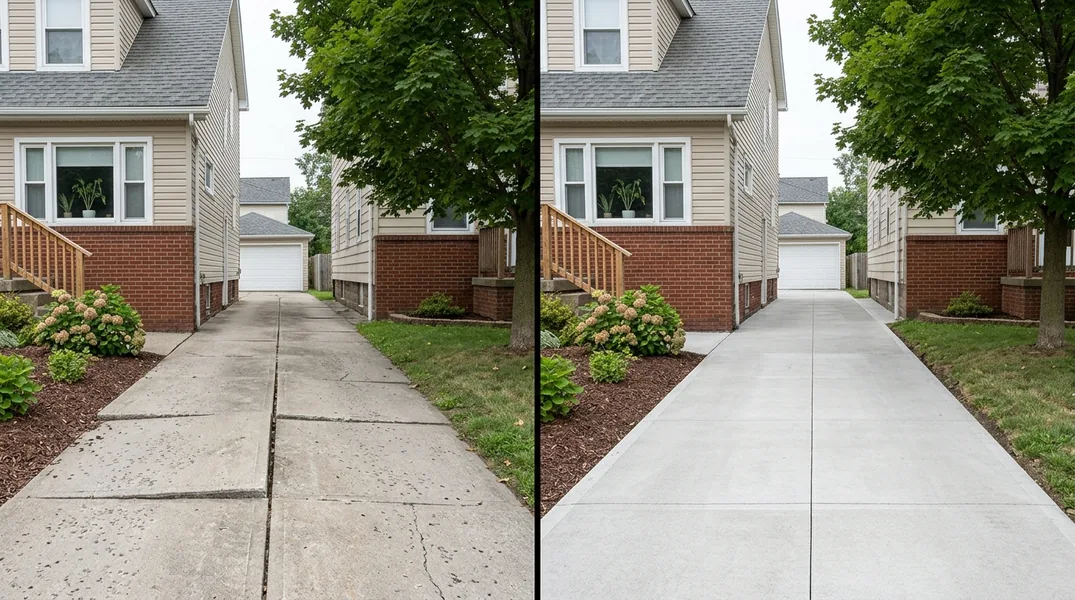
Understanding Frost Heave: Why Buffalo's Winters Attack Your Concrete
If you own a home in Buffalo, you've probably noticed cracks appearing in your driveway or patio after winter. This isn't just normal wear and tear. What you're experiencing is called frost heave, a phenomenon that's particularly aggressive in Western New York due to our unique soil composition and brutal freeze-thaw cycles.
Frost heave occurs when moisture in the soil beneath your concrete freezes and expands. Water expands roughly 9 percent when it turns to ice, and that expansion creates tremendous upward pressure on whatever sits above it. In Buffalo, where temperatures regularly dip below freezing from November through March, this cycle repeats dozens of times each winter. The concrete slab gets pushed up, then settles back down as temperatures warm. Over multiple seasons, this repetitive stress causes the concrete to crack, heave, and eventually fail. It's one of the most common reasons homeowners need Concrete Repair & Resurfacing in our region.
Lake Clay Soil: Buffalo's Hidden Enemy
The real culprit behind frost heave damage in Western New York isn't just the cold. It's the soil itself. Much of Buffalo and the surrounding areas, including Cheektowaga and West Seneca, sit on glacial lake clay deposits left behind thousands of years ago. This clay is incredibly fine-grained and has an exceptional ability to retain moisture. Unlike sandy or gravelly soils that drain well, clay holds water like a sponge.
When that water-saturated clay freezes, the damage potential multiplies. Clay soil can retain moisture in its pores for months, and when winter arrives, all that trapped water has nowhere to go. The freeze-thaw cycle becomes catastrophic. Homeowners often wonder why their Concrete Driveways seem to deteriorate faster than those in other parts of the country, and the answer lies directly beneath the surface. The combination of clay soil and our regional climate creates a perfect storm for concrete failure. This is why proper site preparation and drainage solutions are absolutely critical when installing new concrete in our area.
Freeze-Thaw Cycles and Concrete Damage in Western New York
Buffalo experiences an average of 40 to 50 freeze-thaw cycles per winter season. A freeze-thaw cycle occurs whenever temperatures cross the 32-degree Fahrenheit threshold, going from above freezing to below and back again. Each cycle is an opportunity for water to enter small cracks and pores in the concrete, freeze, expand, and cause additional damage. Over a typical winter, your driveway endures dozens of these micro-fracturing events.
The damage from freeze-thaw is cumulative and progressive. A small hairline crack that appears after the first winter might seem minor, but it's actually a gateway for more water penetration. By year two or three, that crack has widened significantly. Water seeps deeper into the concrete and the base layers beneath it. The structural integrity of your slab is compromised. This is why addressing concrete damage quickly is so important. A small repair today prevents a catastrophic failure tomorrow. If you're noticing signs of frost heave damage like uneven surfaces, step-offs, or widening cracks, it's time to call Buffalo Concrete Pros at (716) 517-4106 for a professional assessment.
Signs Your Concrete Is Suffering from Frost Heave Damage
Not all concrete damage looks the same, and understanding what frost heave damage actually looks like can help you catch problems early. One of the most obvious signs is heaving itself. You might notice that sections of your driveway or patio have lifted higher than adjacent sections, creating a noticeable step or lip. This uneven surface is both a safety hazard and a sign that frost heave is actively occurring beneath the slab.
Other telltale signs include random cracking patterns that don't follow a logical line, spalling (where the concrete surface flakes or breaks away in chips), and scaling (where the top layer of concrete deteriorates and becomes rough). You might also notice that cracks seem to widen and close with the seasons, which is a dead giveaway that freeze-thaw cycles are actively damaging your concrete. If your concrete is more than five years old and you're seeing these signs, frost heave is almost certainly the cause. The good news is that Concrete Repair & Resurfacing solutions can address these issues before they become catastrophic failures that require complete replacement.
Prevention and Solutions: Protecting Your Concrete in Buffalo
The best defense against frost heave is prevention, and that starts with proper installation. When Buffalo Concrete Pros installs new Concrete Driveways, we focus heavily on site preparation and drainage. We ensure that water doesn't accumulate beneath the slab, which means installing proper base materials, grading the site to encourage water runoff, and sometimes installing drainage systems. We also use air-entrained concrete, which contains tiny air bubbles that allow the concrete to expand and contract slightly without cracking. This is especially important in our region where freeze-thaw cycles are relentless.
For existing concrete, prevention means maintaining proper drainage and sealing the surface. A quality concrete sealer fills small pores and prevents water infiltration. It won't stop frost heave entirely, but it significantly reduces how much water can penetrate the concrete. Regular sealing every two to three years is one of the best investments you can make. Additionally, keeping gutters clean, grading soil away from your foundation, and addressing any standing water near your concrete will all help reduce moisture accumulation. If damage has already occurred, timely repairs are essential. Small cracks should be filled immediately to prevent water from entering. Larger sections may need to be resurfaced or replaced. The pricing for repairs varies based on the extent of damage, but catching problems early always costs less than waiting for catastrophic failure.
When to Call a Professional: Concrete Repair Near Me
Deciding whether to attempt a DIY repair or call a professional depends on the severity of the damage. Small hairline cracks and minor surface damage can sometimes be managed with over-the-counter concrete repair products, though results are often temporary. However, if you're seeing significant heaving, large cracks, or widespread damage, professional intervention is absolutely necessary. Attempting to repair frost heave damage yourself often leads to failed repairs that waste time and money.
Buffalo Concrete Pros has been serving homeowners throughout Buffalo and surrounding areas like Cheektowaga and Tonawanda with professional concrete solutions for years. We understand the specific challenges that our region's soil and climate present. Our team can assess your concrete, determine whether repair or replacement is the best option, and provide a solution that will actually last. If you're concerned about frost heave damage or just want a professional opinion, contact us today at (716) 517-4106 or visit our website to request a free estimate. We'll evaluate your concrete and recommend the best course of action to protect your property.
Looking for a professional concrete contractor in Buffalo? Buffalo Concrete Pros responds fast for all your concrete needs.
Get a Free QuoteOur services: Concrete Driveways · Concrete Patios · Stamped & Decorative Concrete